Newsletter
By submitting this form,you consent to receive marketing updates from Durastab Medtech (Durastab IVD) .
Office Location
Shenzhen, China
Production Address
B1501, Meixun Science Park,
No.19, Jinxiu Zhonglu ,
Pingshan.
Durastab Medtech Co., Ltd. has always adhered to the mission of "making diagnostic reagents more stable and more accurate" since its establishment, and is committed to providing excellent ready-to-use reagent solutions to global advanced medical diagnostic companies.
To date, Durastab has successfully provided products to over 600 companies and research teams at thousands of universities and scientific research institutions worldwide, among which are more than 50 listed IVD companies.
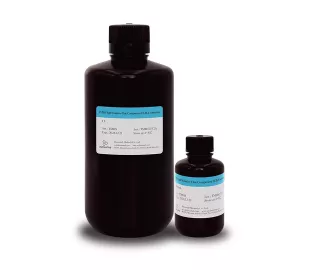
About UsTMB Slow One Component ELISA Substrate is a ready-to-use, one-component TMB ELISA substrate for HRP-based colorimetric detection. It is a slow-type substrate with an exceptionally wide dynamic range within the Durastab™ TMB series , along with low background and consistent stability, which is suitable for chromogenic reactions performed at room temperature for 15–30 minutes or at 37 ℃. Readouts are at 450 nm (stopped endpoint) or 650 nm (kinetic).
Tell us what you need and we will send the file to your email shortly.
Durastab™ TMB ELISA Substrate series features low background, high stability, minimal lot-to-lot variation, and options for different sensitivity levels. It provides an excellent signal response system suitable for the development and production of ELISA kits. TMB Slow One Component ELISA Substrate is a slow-type substrate with an exceptionally wide dynamic range within the Durastab™ TMB series , along with low background and consistent stability, which is suitable for chromogenic reactions performed at room temperature for 15–30 minutes or at 37 °C.
Typical applications: ELISA kit development and production, HRP-based immunoassays, and antibody or protein detection assays read at 450 nm (stopped) or 650 nm (kinetic).
Instruction:
TMB Slow One Component ELISA Substrate should be equilibrated to room temperature before use.
ELISA Chromogenic Reaction Procedure:
Measurement at 450 nm:
1. Wash: After HRP conjugate incubation, wash the plate 3 times with PBST/TBST washing buffer (containing surfactant).
2. Chromogenic reaction: Add 100 μL substrate and incubate at 20–37 °C for the appropriate time, color is blue;
3. Stop: Add 100 μL TMB Stop Solution 450, the color will change yellow;
4. Read: Measure the absorbance at 450 nm within 30 minutes,
Measurement at 650 nm:
1. Wash: After HRP conjugate incubation, wash the plate 3 times with PBST/TBST washing buffer (containing surfactant).
2. Chromogenic reaction: Add 100 μL substrate and incubate at 20–37 °C for the appropriate time, color is blue;
3. Stop: Add 100 μL TMB Stop Solution 650, the color remains blue ;
4. Read: Measure the absorbance at 650 nm within 30 minutes,
Kinetic measurement at 650 nm:
1. Wash: After HRP conjugate incubation, wash the plate 3 times with PBST/TBST washing buffer (containing surfactant).
2. Chromogenic reaction: Add 100 μL substrate and incubate at 20–37 °C.
3. Read: Measure the absorbance at 650 nm at set intervals (e.g., every 1 minute).
For research use only or for further use in the production of detection kits. Not for human or animal use!
Q1: How should I store the one-component TMB ELISA substrate?
A: Store the substrate at 2-8 °C protected from light; do not freeze it. The solution is supplied ready to use - equilibrate to room temperature before starting the assay for consistent lot-to-lot signal.
Q2: What wavelength should I read TMB at, and which stop solution should I use?
A: TMB is read at two wavelengths depending on how you run the assay: the blue reaction product is measured kinetically at 650 nm, or the reaction is stopped with an acidic stop solution and the yellow endpoint is measured at 450 nm. For the standard endpoint workflow, use TMB Stop Solution 450 - its acid formulation gives a stable yellow endpoint at 450 nm, the most sensitive endpoint readout, and the stopped color is stable for batch reading of full plates. For kinetic or dual-wavelength measurement, use TMB Stop Solution 650 - it preserves the blue product for real-time 650 nm tracking and extends the dynamic range at high analyte concentrations. Both are non-corrosive, SDS-free and validated with the Durastab™ TMB series.
Q3: How do I choose between TMHS, TMST, TMBR, TMSS and TMSP?
A: Match the kinetic range to your assay: TMSS (Super Sensitive) for the lowest detection limits, TMHS (High Sensitive) for routine high-sensitivity kits, TMST as the standard workhorse, TMBR (Broad Range) for wide analyte ranges, and TMSP (Slow Plus) when a slower reaction and longer working window are preferred.
Q4: Is the TMB substrate suitable for large-scale kit manufacturing?
A: Yes. The formulation is filled in a clean-room environment with tight lot-to-lot consistency, and single-batch production up to 1,950 L with bulk packaging from 100 mL to 20 L supports commercial ELISA kit manufacturing.
Q5: Can I use TMB Slow One Component ELISA Substrate as a drop-in replacement for my current TMB substrate?
A: In most cases, yes. TMB Slow One Component ELISA Substrate uses the same HRP/TMB/hydrogen-peroxide chemistry and is read at the same 450 nm (stopped) and 650 nm (kinetic) wavelengths as the leading one-component TMB substrates, so it can typically be swapped in without protocol changes. Start with the same incubation time, then fine-tune to match your signal window. Share your current substrate and assay format and our technical team will confirm the closest grade and arrange a free 100 mL sample for a side-by-side run.

Committed to providing excellent ready-to-use reagent solutions to global advanced medical diagnostic companies.
Send RequestBy submitting this form,you consent to receive marketing updates from Durastab Medtech (Durastab IVD) .
B1501, Meixun Science Park,
No.19, Jinxiu Zhonglu ,
Pingshan.

